40.5kV High Voltage Switchgear for Power Grid: Selection and Interfaces
Specifying 40.5kV high voltage switchgear for power grid projects requires a system-level view. The nominal equipment class alone does not establish the busbar current, short-circuit duty, insulation coordination, protection scheme, enclosure type, or site conditions.
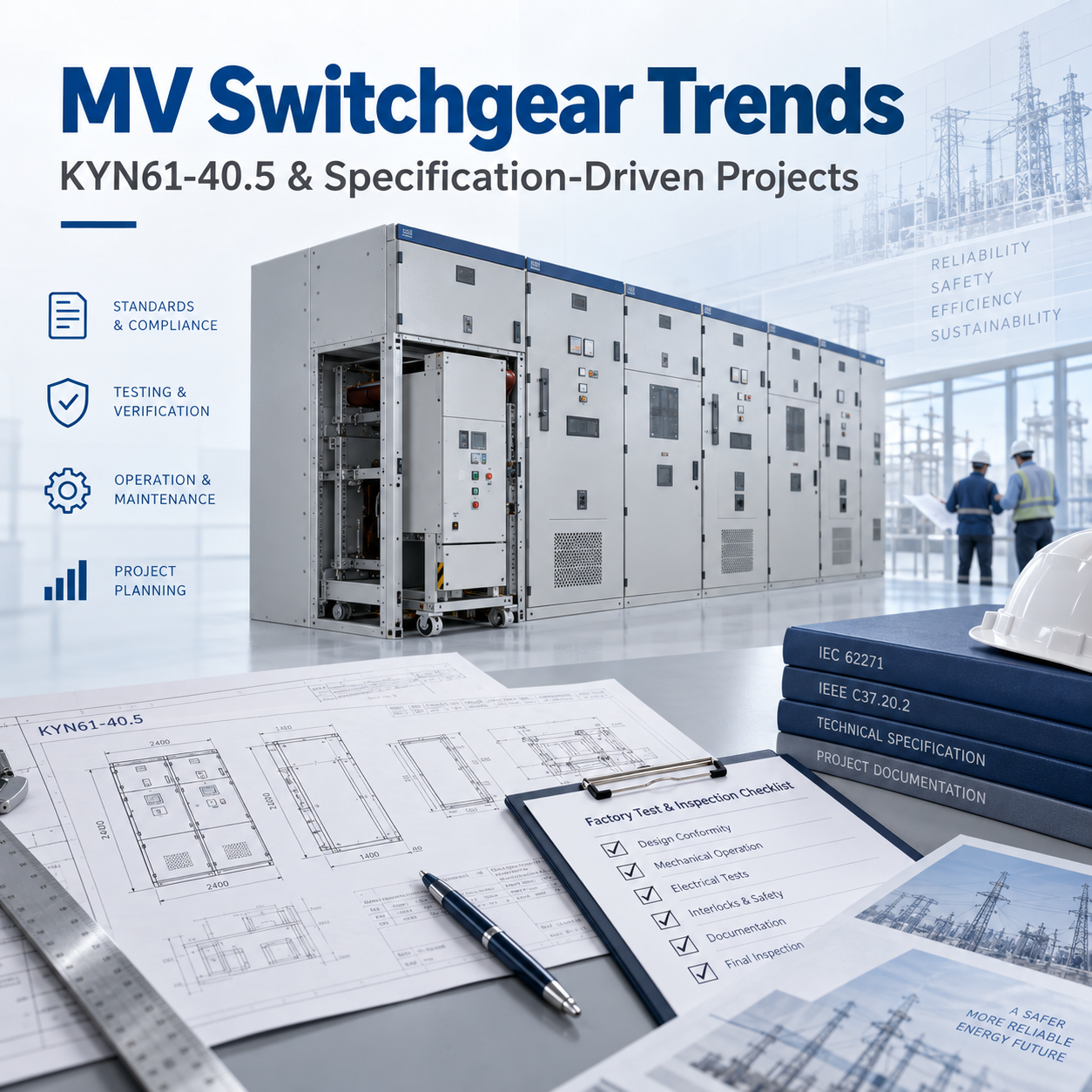
Specifying 40.5kV high voltage switchgear for power grid projects requires a system-level view. The nominal equipment class alone does not establish the busbar current, short-circuit duty, insulation coordination, protection scheme, enclosure type, or site conditions. IEC 62271-200 covers AC metal-enclosed switchgear and controlgear above 1 kV and up to 52 kV, placing a 40.5 kV class assembly within its voltage scope when the equipment is of the covered type. The project specification must still define the actual ratings and tests.
Contents
· 1. Confirm the system and equipment rating basis
· 2. Choose the architecture to suit the grid
· 3. Assess the site and maintainability
· 4. Verify short-circuit and insulation coordination
· Reference data for selection
· Published application example: compact 40.5 kV dry-air switchgear research
· Frequently Asked Questions
· Conclusion
1. Confirm the system and equipment rating basis
Start with the single-line diagram and operating conditions. Identify the highest system voltage, grounding method, frequency, normal and emergency load, fault level, protection clearing time, and future expansion allowance. A 40.5 kV class label should be checked against the utility’s required equipment ratings and insulation coordination. The buyer should clarify whether the supply includes switchgear only or also transformers, protection relays, metering, cables, bus duct, and control systems.
IEC 62271-200:2021 applies to prefabricated metal-enclosed switchgear and controlgear for rated voltages above 1 kV and up to 52 kV AC, at frequencies up to 60 Hz, for indoor or outdoor installation, with air-insulated or fluid-filled compartments. Amendment 1 was issued in 2024. Confirm the current consolidated edition and national adoption for the project. The standard’s scope is not a complete project specification: it does not decide the required current, fault duty, protection philosophy, or site-specific accessories for a particular grid.
Distinguish rated voltage from rated normal current and short-time withstand current. The continuous current rating must suit expected loading and ambient conditions; the short-time rating and duration must suit the calculated fault duty and clearing scheme.
2. Choose the architecture to suit the grid
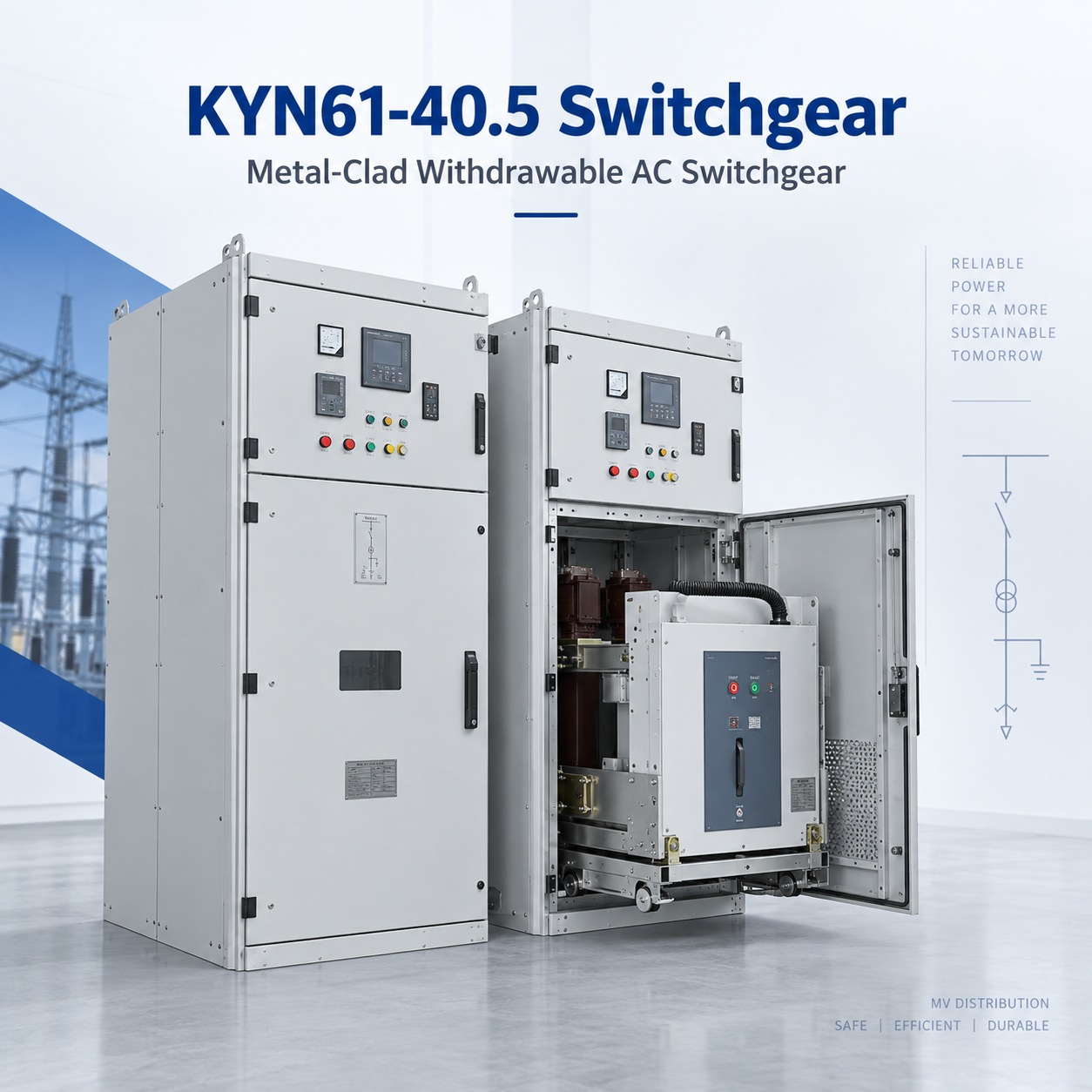
Compare air-insulated and gas- or alternative-gas-insulated arrangements based on space, maintenance access, environmental policy, lifecycle service, and site constraints. Metal-enclosed assemblies vary in compartment layout and accessibility. Review whether the installation requires internal arc classification and which sides, duration, and accessibility conditions apply. Such a classification must be stated and tested for the actual offered configuration; it should not be inferred from “metal-clad” or “arc resistant” marketing language.
Protection and control are part of the equipment interface. Specify relay functions, communications protocols, time synchronization, DC supply, trip circuits, interlocks, local/remote controls, and event records. Confirm point lists and drawings with the utility’s automation standards. A technically compliant panel can still delay a project if its wiring or communication interface is incompatible with the station design.
3. Assess the site and maintainability
Provide the supplier with altitude, ambient temperature range, humidity, pollution severity, seismic demand, wind or rain exposure for outdoor equipment, and any corrosive or dusty conditions. State whether equipment is installed indoors, in a prefabricated building, or outdoors. These conditions can affect insulation, enclosure, heaters, ventilation, creepage distances, and seismic qualification. Ask which design assumptions are included and which require project-specific confirmation.
Room layout should reserve front and rear access where needed, cable trench space, lifting routes, door clearance, ventilation, fire separation, and future extension bays. Confirm floor loading, anchoring, and the route to the final position. Maintenance access is a safety and availability issue, not a late architectural detail. Review safe isolation, earthing switches, mechanical and electrical interlocks, racking procedures, and access control with the operating team.
4. Verify short-circuit and insulation coordination
Power system studies establish fault current and protection clearing time; switchgear ratings must be selected against those studies rather than chosen from a catalog alone. Check the short-time withstand duration and peak current, breaker operating sequence, and coordination with upstream and downstream protection. Ask the design team to confirm whether future network reinforcement changes the fault level during the intended service life.
Insulation coordination should consider power-frequency withstand, lightning impulse withstand, switching transients where relevant, altitude correction, and the connected equipment. Test values are specific to voltage class, design, and standard edition. Avoid copying a test voltage from an unrelated product or research paper into a purchase specification. The responsible engineer should establish required values from the applicable standard and utility specification.
Reference data for selection
Reference item | Published value or scope | How to use it |
IEC 62271-200:2021 scope | AC metal-enclosed switchgear above 1 kV to 52 kV; up to 60 Hz | Confirms standard scope for covered 40.5 kV assemblies; project ratings still need definition. |
IEC Amendment 1 | Published 27 June 2024 | Check the consolidated edition and local adoption when preparing a current specification. |
2026 compact dry-air 40.5 kV study | Reported cabinet width reduced from 1,000 mm to 800 mm; study included 215 kV lightning-impulse withstand test | A research result for its studied design only; not a generic footprint or acceptance requirement. |
Procurement data to provide | System diagram, load, fault study, site conditions, interfaces, protection and communications | Project inputs, not manufacturer performance claims. |
The 1,000 mm to 800 mm width and 215 kV impulse value come from a specific published research study, not an IEC-wide requirement or a Changhui product specification. Confirm all ratings and dimensions against the selected design and project standard.
Published application example: compact 40.5 kV dry-air switchgear research
A 2026 paper in Energies examines compact 40.5 kV dry-air insulated switchgear. The study reports a cabinet-width reduction from 1,000 mm to 800 mm by optimizing internal clearances, supported by electric-field analysis and experimental checks including a 215 kV lightning-impulse withstand test. This is a technical research example illustrating the trade-off between footprint and insulation design. It is not evidence that every compact switchgear design can use the same dimensions or test value.
Frequently Asked Questions
Does “40.5 kV” define all switchgear ratings?
No. It identifies a voltage class or rating basis, but continuous current, short-circuit withstand, insulation level, enclosure, frequency, and site conditions also need to be specified.
Is IEC 62271-200 applicable to every 40.5 kV product?
It applies to the covered category of prefabricated metal-enclosed AC switchgear and controlgear in its scope. Confirm product type, configuration, edition, and applicable national requirements.
Should a compact cabinet width from a research article go into my tender?
Only if the project has a justified space requirement and the bidder demonstrates that the proposed design, ratings, access, and test evidence meet it. A single study dimension is not a general market norm.
What information should a buyer send to a switchgear supplier?
At minimum: single-line diagram, voltage/frequency, loading, fault study and clearing time, bus arrangement, protection and communication requirements, installation environment, cable details, and applicable utility standards.
Conclusion
A sound 40.5kV high voltage switchgear for power grid specification converts system studies and site conditions into explicit ratings, interfaces, and evidence requirements. IEC 62271-200 defines a relevant scope for metal-enclosed assemblies, while the project team remains responsible for selecting current, fault, insulation, protection, and environmental requirements. Use published research as a source of engineering questions, not as a substitute for project design. Before comparing suppliers, issue a complete data schedule and request configuration-specific test documentation. Changhui-specific capability details should be verified directly because its site could not be accessed during this research.