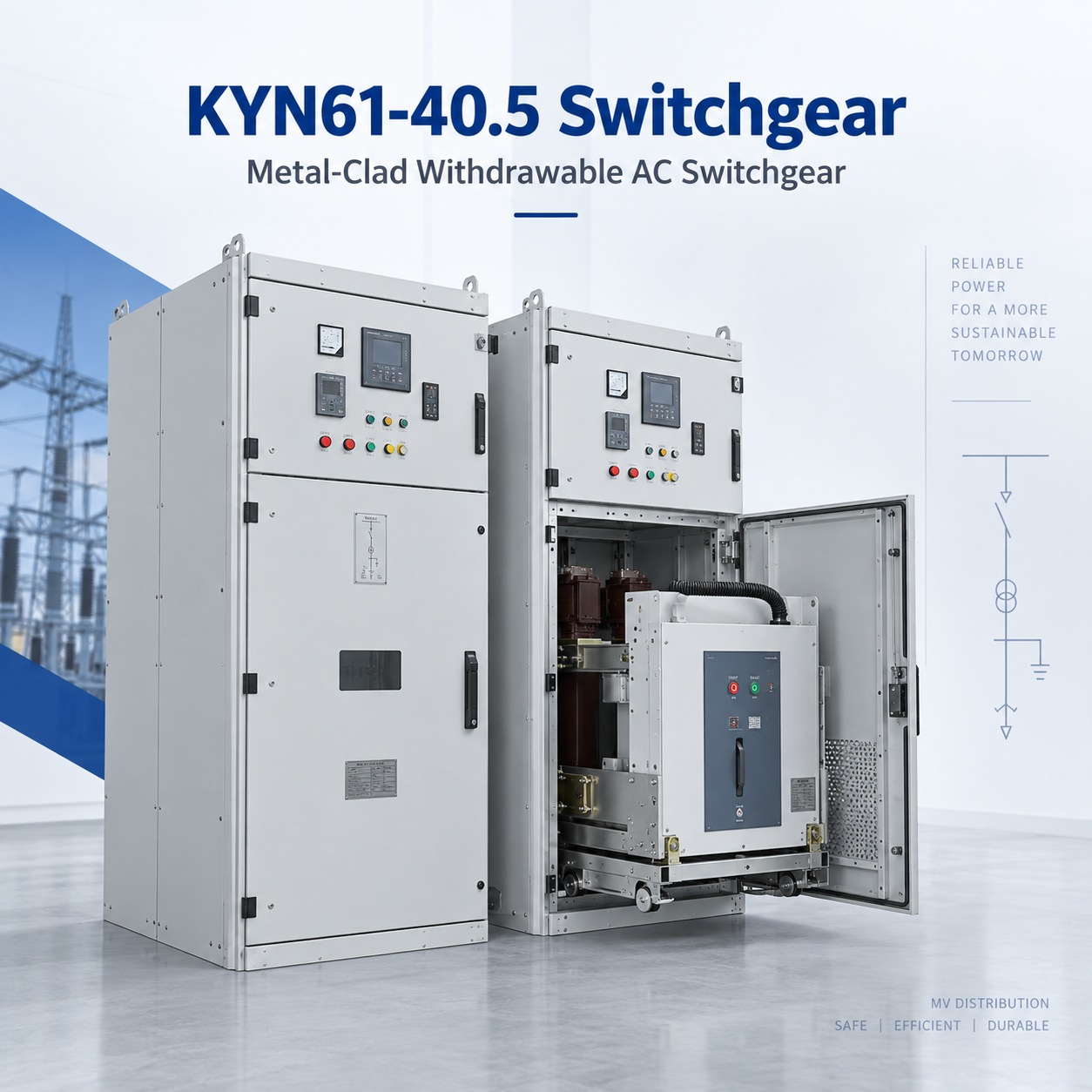
KYN61-40.5 Metal-Clad Withdrawable Switchgear Trends
KYN61-40.5 Metal-Clad Withdrawable Switchgear is a medium-voltage distribution cabinet selected when a project needs a 40.5 kV class metal-clad arrangement, withdrawable functionality and controlled maintenance access. Jiangsu Changhui Electric Co., Ltd.
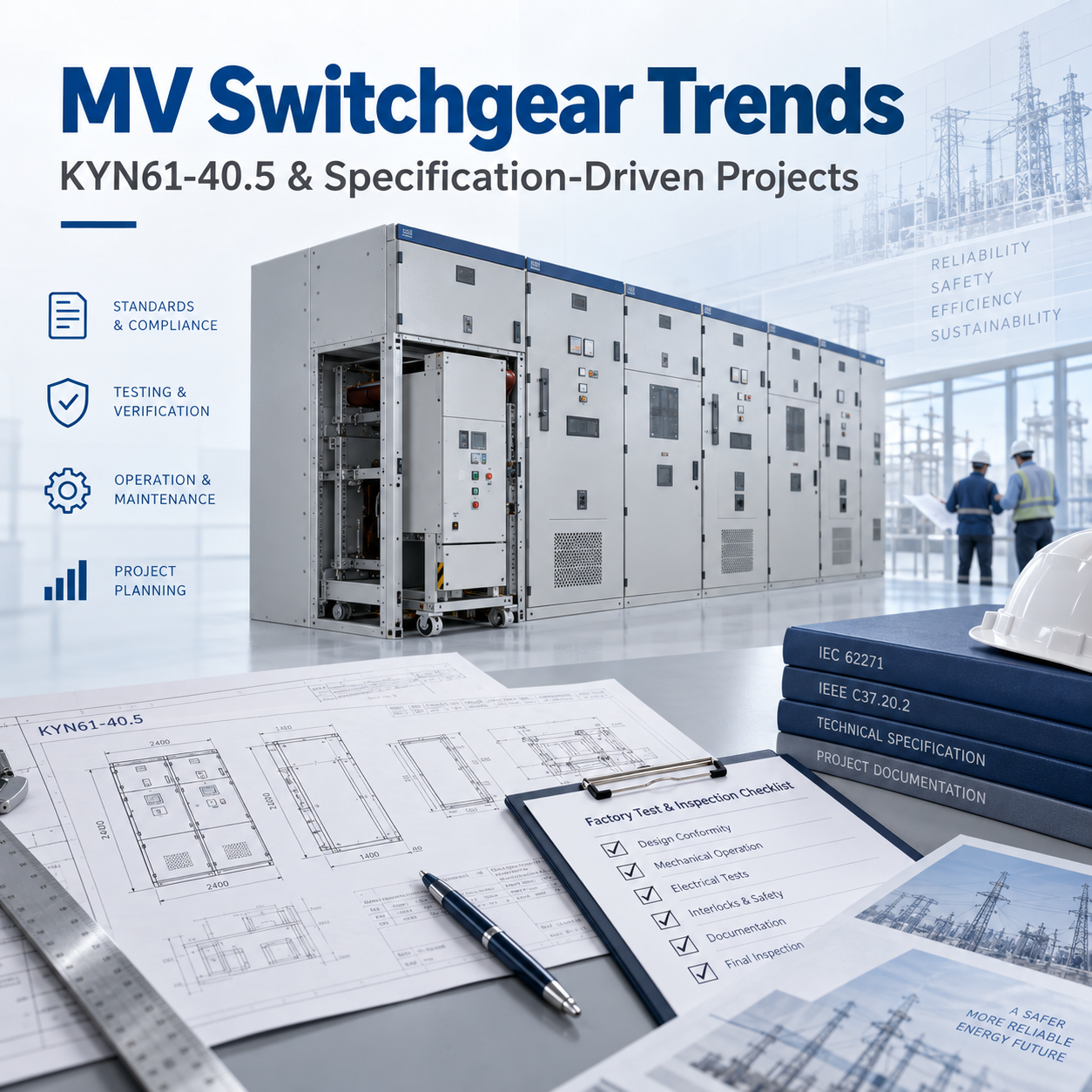
Table of Contents
1. Why Medium-Voltage Switchgear Is Becoming More Specification-Driven
2. The supply chain behind a switchgear project
3. Comparing common medium-voltage approaches
4. Standards, tests and documentation
5. Industry case: an industrial expansion
6. How buyers compare suppliers
7. Where MV distribution is heading
8. Frequently Asked Questions
9. Plan Your Medium-Voltage Switchgear Review
Why Medium-Voltage Switchgear Is Becoming More Specification-Driven
KYN61-40.5 Metal-Clad Withdrawable Switchgear is a medium-voltage distribution cabinet selected when a project needs a 40.5 kV class metal-clad arrangement, withdrawable functionality and controlled maintenance access. Jiangsu Changhui Electric Co., Ltd. lists KYN61-40.5 among its high-voltage switchgear models and presents custom electrical distribution equipment engineered to approved drawings and specifications. Its wider portfolio includes KYN28-12, HXGN□-12, low-voltage switchgear, distribution boxes, box-type substations, busway systems and cable trays.
Industrial plants, substations and infrastructure projects are asking for clearer maintenance boundaries, documented tests and layouts that can be expanded without guesswork. That makes medium-voltage switchgear a system decision. KYN61-40.5 is one listed model, but its usefulness depends on the feeder function, busbar arrangement, protection scheme, cable route and operating procedure.
The market also includes fixed switchgear, enclosed units, low-voltage cabinets, busway and box-type substations. Buyers should compare the complete installation route, not only the cabinet label.
The supply chain behind a switchgear project
A switchgear order links sheet metal, busbars, insulation, breakers, relays, CTs or PTs, wiring, coating, assembly, routine tests and documents. A change in current or fault level can affect several parts. Controlled drawings and a bill of materials should therefore be approved before production.
Factory testing is valuable because it checks cabinet identity, wiring, mechanical operation, insulation and dielectric performance before the equipment reaches site. It does not remove the need for site commissioning; it makes the handover more predictable.
Comparing common medium-voltage approaches
Approach | Strength | Risk to manage | Typical fit |
Withdrawable metal-clad | Planned service, test and isolation positions | Interlock and movement checks | Maintenance-sensitive MV feeders |
Fixed metal-clad | Stable compact installation | Maintenance may require outage | Regular feeder panels |
Ring main unit | Compact distribution point | Limited customization | Compact utility networks |
Packaged substation | Integrated transformer and distribution | Transport and site interface | Prefabricated projects |
This table is a planning lens. Confirm voltage, current, fault level, protection, room and maintenance requirements for the actual project.
Standards, tests and documentation
The purchaser should identify the governing IEC or local standard, insulation level, short-circuit duration, temperature rise, internal-arc requirement where applicable and routine-test scope. The website lists ISO 9001 quality-system information and states that CCC and type-test reports are available for relevant products; request current documents for the selected configuration.
A final dossier should include approved drawings, wiring diagrams, material or component records, inspection reports, test results, labels and packing lists. The document index should match the panel numbers shipped.
Industry case: an industrial expansion
When a factory adds a new production line, the existing medium-voltage room may need an incoming panel, transformer feeder and outgoing panels. The review must include spare ways, bus-section logic, cable trench capacity, protection coordination and the outage plan. KYN61-40.5 can be considered when the 40.5 kV class and withdrawable arrangement meet the project brief.
The key lesson is coordination. A cabinet chosen without the room and feeder schedule can create late cable changes, inaccessible doors or incompatible protection settings.
How buyers compare suppliers
Ask which fabrication and test operations are in-house, how busbar joints are checked, how interlocks are verified, which reports accompany shipment and how revisions are controlled. Request a complete bill of materials and a realistic schedule from drawing approval to factory test.
Compare delivery on a complete basis: cabinet, functional unit, protection, CT or PT, accessories, documents, packing and commissioning support. Clarify exclusions before purchase.
Where MV distribution is heading
Medium-voltage projects are moving toward modular panels, clearer digital drawings and stronger lifecycle records. Buyers want equipment that can be identified, isolated, tested and expanded with less site improvisation. Suppliers that connect engineering, fabrication and testing can make that process easier.
A controlled switchgear file should contain the latest single-line diagram, cabinet arrangement, rated voltage and current, short-circuit level, protection settings, busbar layout, interlocking schedule, cable entry, inspection plan, test records, packing marks and delivery sequence. This keeps design, production, commissioning and maintenance teams on the same revision. Confirm which values are fixed and which remain subject to project approval. During factory inspection, verify cabinet identity, mechanical operation, insulation distances, wiring, earthing and labels against the approved drawings. Clear records make site installation faster and future expansion safer.
A useful quotation is more than a cabinet price. It explains assumptions, included accessories, testing, documents, delivery and technical support. For medium-voltage equipment, a small omission in the specification can become a large site problem. Early review is the sensible place to close those gaps. Before release, check the real installation path: room height, cable trench, door width, lifting route, rear access, panel alignment, fire compartments and maintenance clearance. Confirm whether the switchgear lineup needs a bus-section, spare cubicle, metering panel or future feeder. Write the operating sequence in plain language so the operator, protection engineer and installer read the same intent. For a withdrawable design, identify service, test and isolated positions, the permitted earthing operation and the interlock that prevents unsafe movement. During factory inspection, match panel numbers to the single-line diagram, verify wiring and terminal marks, operate the functional unit, inspect busbar joints and confirm insulation and withstand tests required by the project. At site, record torque, cable termination, earthing, protection settings and commissioning results. Keep drawings, test reports and photographs in the handover file. If the project expands later, the original panel arrangement, current rating, pole configuration and spare-way information should be available before a new cabinet is ordered. These details protect the investment and reduce troubleshooting time. They also help overseas buyers compare proposals fairly because the scope is visible. A dependable KYN61-40.5 Metal-Clad Withdrawable Switchgear project is therefore built from clear electrical data, mechanical coordination, controlled manufacturing and documented testing. The model name is only the starting point; the approved project specification is what makes the equipment fit the system.
When comparing suppliers, list straight panels, busbar sections, breakers, relays, CTs or PTs, cable terminals, interlocks, supports, tests and documents separately. Confirm whether installation and commissioning support are included. This makes the quotation easier to approve and the handover easier to manage. It also gives maintenance teams a reliable reference during future modifications.
Clear records support safer commissioning, faster troubleshooting and more predictable future expansion. They also help the purchaser maintain a complete asset history. For repeat projects, keeping approved drawings and test results on file shortens review cycles and reduces avoidable clarification during procurement.
Frequently Asked Questions
What does KYN61-40.5 indicate?
It identifies a KYN61-40.5 high-voltage switchgear model listed by Jiangsu Changhui Electric. Confirm the project voltage class, rated current, short-circuit rating and applicable standard in the approved specification.
Why is withdrawable construction useful?
A withdrawable unit can support planned isolation and maintenance by allowing the functional unit to move between service, test and isolated positions, subject to the actual design and interlocking system.
What information is needed for a quotation?
Send the single-line diagram, rated voltage and current, short-circuit level, feeder functions, protection relay requirements, cable entry, dimensions, quantity and delivery location.
Which tests should be requested?
Agree insulation, dielectric or AC withstand, interlock, mechanical operation, wiring, protection and routine inspection requirements according to the project standard and purchaser specification.
Plan Your Medium-Voltage Switchgear Review
Send your single-line diagram, feeder schedule, room layout, current, fault level and documentation requirements to Jiangsu Changhui Electric Co., Ltd. A structured review can clarify KYN61-40.5 and related MV options.